Musik spielenPlaying music
Die eigene Stimme üben, als säße das Orchester mit im Raum.Practise your part as if the orchestra were in the room.
Am Handy, Tablet oder Computer, zu Hause. Mit eigenem Orchester oder ohne.On your phone, tablet or computer, at home. With an orchestra of your own, or without one.
Gleich ein Stück ausprobierenTry a piece now
Corellis Weihnachtskonzert: Satz und Stimme wählen und losspielen. Ohne Anmeldung.Corelli's Christmas Concerto: pick a movement and your part, and play. No sign-up.
Corelli spielen →Play Corelli →Corelli, Concerto grosso op. 6 Nr. 8 — Kodierung: CCARH (F. Bennion, E. Correia), CC BY-NC 4.0Corelli, Concerto grosso op. 6 no. 8 — encoding: CCARH (F. Bennion, E. Correia), CC BY-NC 4.0 · LizenzLicence
Allein zu HauseAlone at home
Das ganze Orchester im OhrThe whole orchestra in your ear
Deine Stimme mit allen anderen drumherum. Du wählst „Alle, ich lauter“, „Nur die anderen“ oder „Nur ich“.Your part with everyone else around it. Choose “All, me louder”, “Others only” or “Just me”.
Im eigenen TempoAt your own tempo
Bis zur halben Geschwindigkeit und wieder hinauf; die Tonhöhe bleibt, wo sie ist. Ludi zählt ein, ab jedem Takt, den du wählst.Down to half speed and back up again; the pitch stays where it is. Ludi counts you in, from any bar you choose.
Die Noten laufen mitThe notes run along
Deine Stimme zieht beim Spielen vorbei: der Takt, in dem du bist, die Note, die gerade klingt, die Lautstärke, die gerade gilt. Oder als ganzes Blatt, wenn dir das lieber ist.Your part moves past as you play: the bar you are in, the note that is sounding, the dynamic that applies right now. Or as a whole page, if you prefer.
Auf wen hörenWhom to listen to
An einigen Stellen unter deiner Zeile: auf welche Stimme du dort hören sollst, mit ein paar ihrer echten Noten.At a few places under your line: which part to listen to there, with a few of its real notes.
Ludi hört auf deinem Gerät zuLudi listens on your device
Schalte es ein, und Ludi sagt es dir beim Spielen: „Zu spät“, „Etwas zu hoch“. Das geschieht alles auf deinem Gerät; aufgenommen wird nichts.Switch it on and Ludi tells you while you play: “Late”, “A bit sharp”. It all happens on your device; nothing is recorded.
Sehen, woran du arbeitestSee what to work on
Mit Name und PIN merkt sich Ludi deine Übe-Tage: je Satz, wie sehr im Takt und wie sauber, die Stellen, die immer wieder hakten, und einen Tipp, was du als Nächstes übst.With a name and a PIN, Ludi keeps your practice days: per movement how in time and how in tune you were, the passages that kept catching, and a tip what to practise next.
Deine Eintragungen in den NotenYour markings in the music
Striche, Finger, Lagen und kurze Notizen, für dich oder für deine ganze Stimme. Für Geige, Bratsche und Cello schlägt Ludi Finger und Striche vor.Bowings, fingerings, positions and short notes, for yourself or for your whole section. For violin, viola and cello Ludi can suggest fingerings and bowings.
In der ProbeIn rehearsal
So probt Ludi mit unserem eigenen Orchester. Dafür braucht es einen Mac mit Ludi im Raum; deshalb gibt es vorerst das Üben zu Hause.This is how Ludi rehearses with our own orchestra. It needs a Mac with Ludi in the room, so for now we offer practising at home.
Ludi führtLudi leads
Er zählt ein und gibt das Tempo. Wer will, hat die eigene Stimme in einem Ohr, alle auf derselben Uhr.He counts in and sets the tempo. Everyone can have their part in one ear, all on the same clock.
Die Noten am TabletThe music on tablets
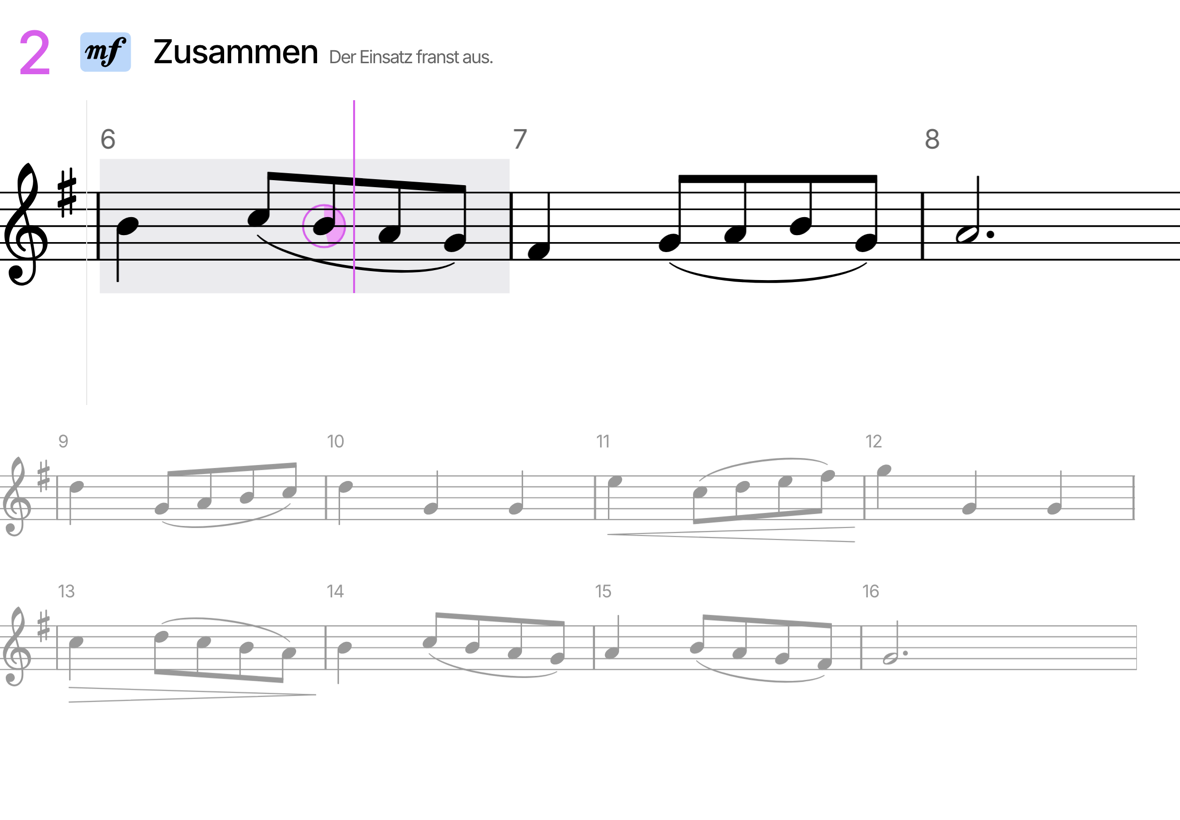
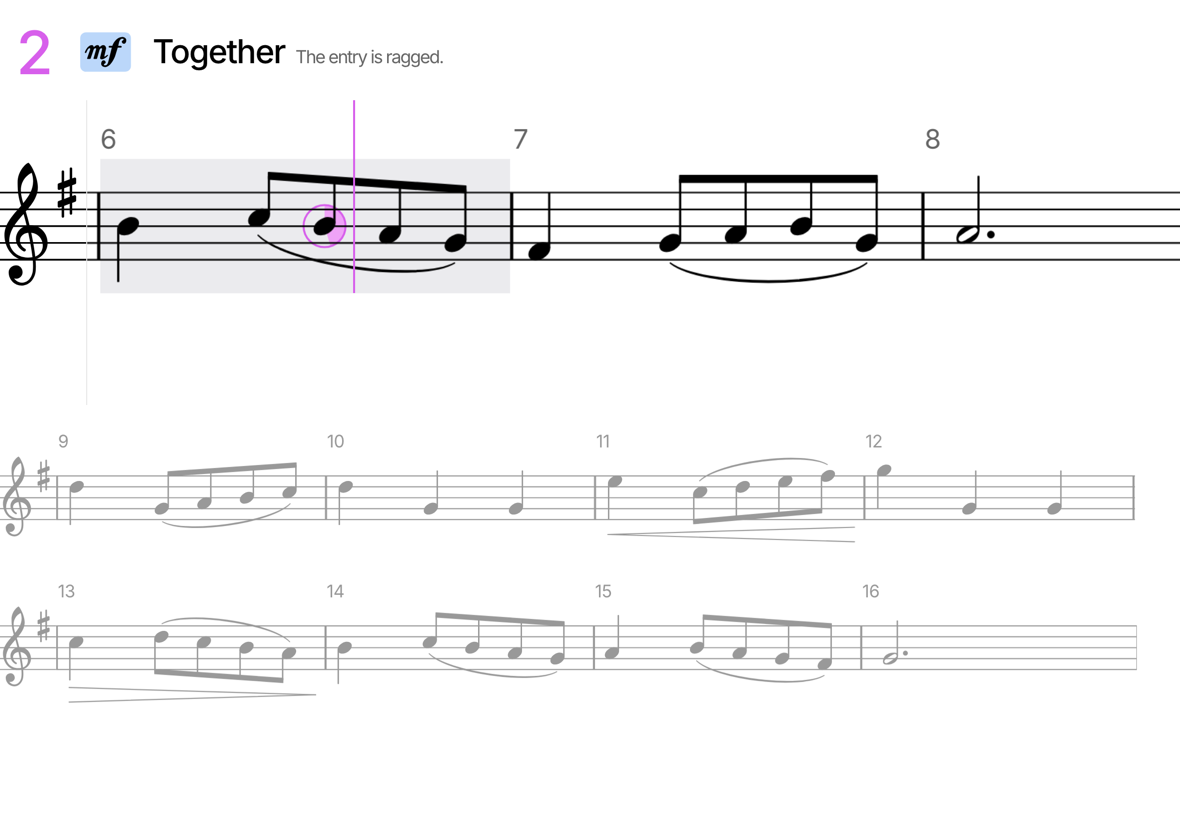
Die Stimme läuft auf Tablets und Handys im Querformat mit. Über den Noten: der Schlag, die Lautstärke und Ludis Wort.The part runs along on tablets and phones in landscape. Above the notes: the beat, the dynamic, and Ludi's word.
Ludis Worte, im MomentLudi's words, in the moment
„Leiser“, „Zusammen“, „Nicht eilen“, „Mit mir!“ — während ihr spielt. Vor dem eigenen Einsatz: „Einsatz in 2 Takten“. Vor gemeinsamen Einsätzen: wer den Einsatz gibt, damit alle auf eine Person schauen.“Softer”, “Together”, “Don't rush”, “With me!” — while you play. Before your entry: “Entry in 2 bars”. Before shared entries: who gives the entry, so everyone watches one person.
Nach jedem DurchgangAfter each run
Die Noten markieren die Takte, in denen das Orchester nicht ganz zusammen war. Für alle gleich, nie über einen einzelnen Spieler.The notes mark the bars where the orchestra was not quite together. The same for everyone, never about a single player.
Deine StückeYour pieces
Sag uns, was du spielst. Wir bereiten es vor.Tell us what you play. We prepare it.
Für dein Orchester oder nur für dich: E-Mail-Adresse und Stücke angeben, und deinen eigenen Übe-Link bekommst du sofort. Wir nehmen gemeinfreie Quellen, wo es sie gibt, sonst eure eigenen Stimmen.For your orchestra or just for you: leave your e-mail address and the pieces, and you get your own practice link straight away. We use public-domain sources where they exist, otherwise your own parts.
Anmelden →Sign up →Kostenlos und ohne Werbung.Free and without ads.
OperOpera
Eine Oper hören und immer wissen, wo man gerade ist.Hear an opera and always know where you are.
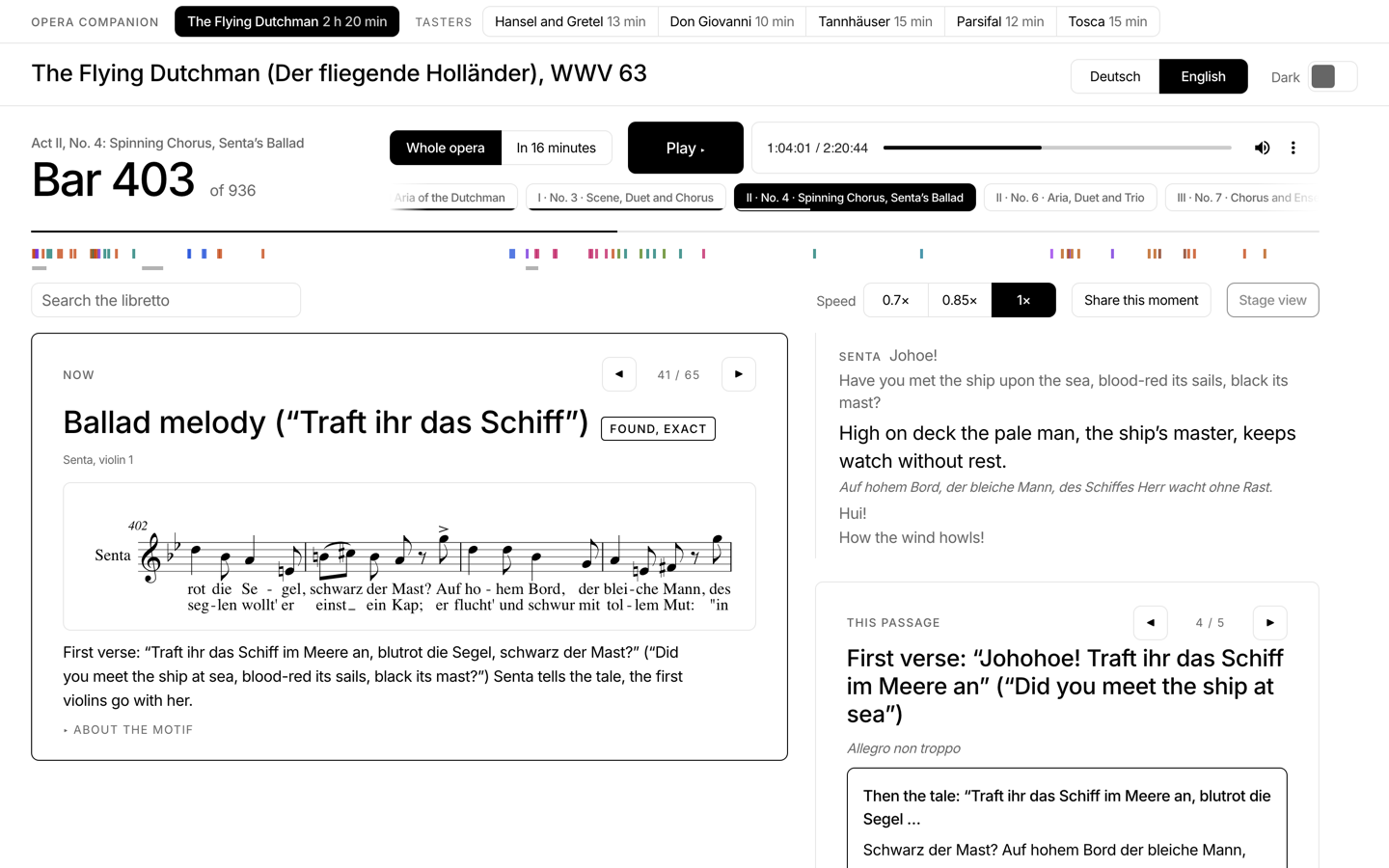
Der Hörbegleiter spielt eine Aufnahme und zeigt Takt für Takt, wo man gerade ist, welches Motiv erklingt und was an der Stelle bemerkenswert ist. Auf Deutsch und Englisch.The opera companion plays a recording and shows, bar by bar, where you are, which motif is sounding and what is remarkable at that moment. In English and German.
Wagners Der fliegende HolländerWagner's The Flying Dutchman
Die ganze Oper in der Aufnahme von 1960 unter Franz Konwitschny, mit ihren Motiven und deren Noten, dem gesungenen Text mit Übersetzung und Wissenswertem zu jeder Stelle. Dazu kurze Kostproben aus fünf weiteren Opern.The whole opera in the 1960 recording under Franz Konwitschny, with its motifs and their notes, the sung text with translation, and background on each passage. Plus short tasters of five more operas.
Der Holländer in 16 MinutenThe Dutchman in 16 minutes
Die wichtigsten Stellen der ganzen Oper hintereinander, mit kurzen Brücken dazwischen.The key passages of the whole opera in a row, with short bridges in between.
MotivjagdMotif hunt
Drei Minuten: Hörst du den Holländer? Drei Stellen, zwei Motive, und die Seite fragt dich.Three minutes: can you hear the Dutchman? Three passages, two motifs, and the page asks you.
Selbst dirigierenConduct it yourself
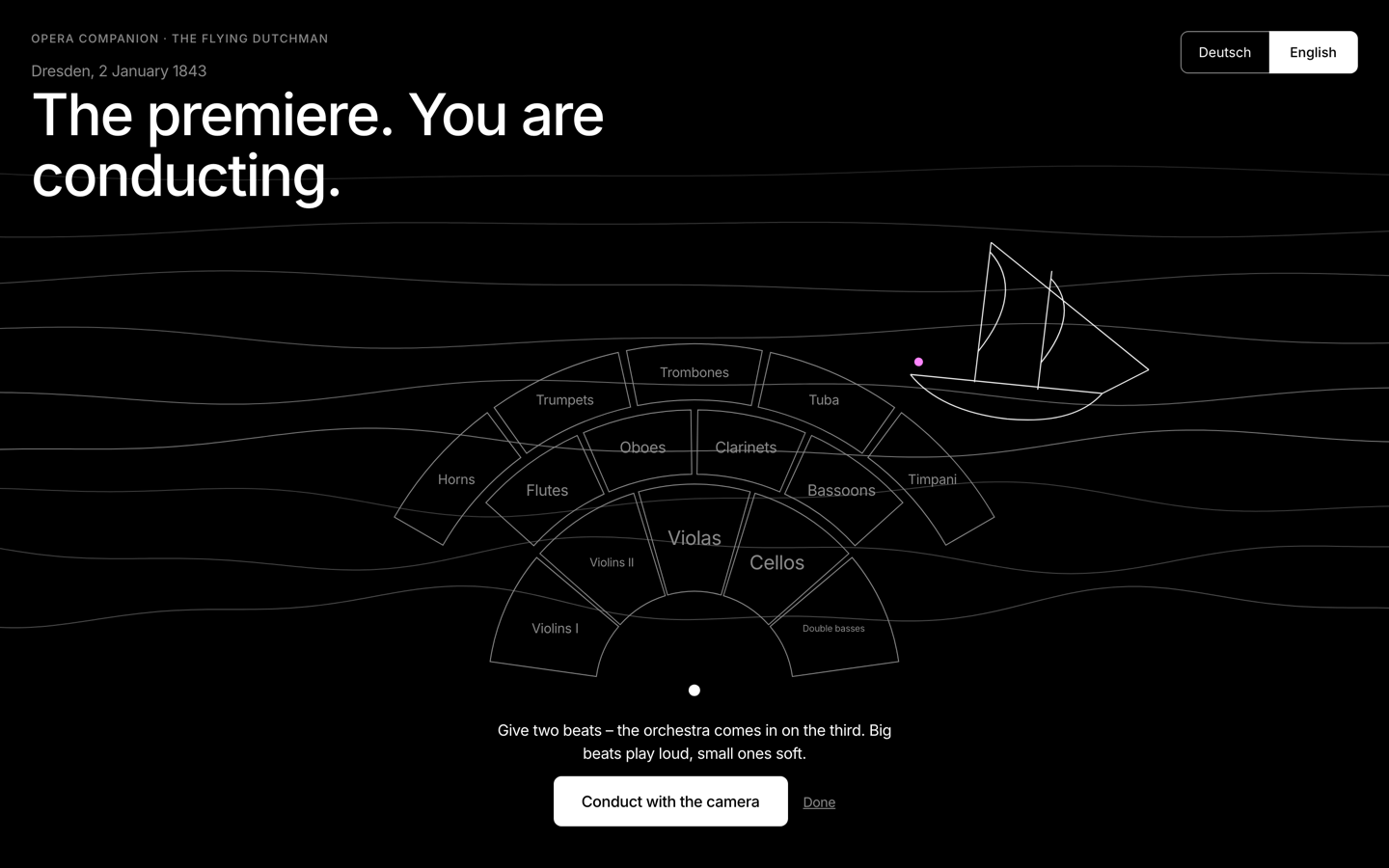
Dresden, 2. Januar 1843, die Uraufführung. Gib mit der Hand vor der Kamera zwei Schläge, und das Orchester setzt ein; große Schläge spielen laut, kleine leise.Dresden, 2 January 1843, the premiere. Give two beats with your hand in front of the camera, and the orchestra comes in; big beats play loud, small ones soft.
Die Aufnahme von 1960 ist in Europa frei und spielt nur dort. Der Hörbegleiter ist in einer Testphase: Du beginnst mit deiner E-Mail-Adresse.The 1960 recording is free in Europe and plays only there. The opera companion is in a test phase: you start with your e-mail address.
Zum Hörbegleiter →Open the opera companion →